How I made 254 people love me and everyone else HATE me
AI group photos will become the next CT trend. Not because they look cool. Because people want to find themselves inside the content.
Prediction: AI group photos, creator scenes, and community posters will spread across Crypto Twitter. The creators who win will understand the psychology, not just the prompt.
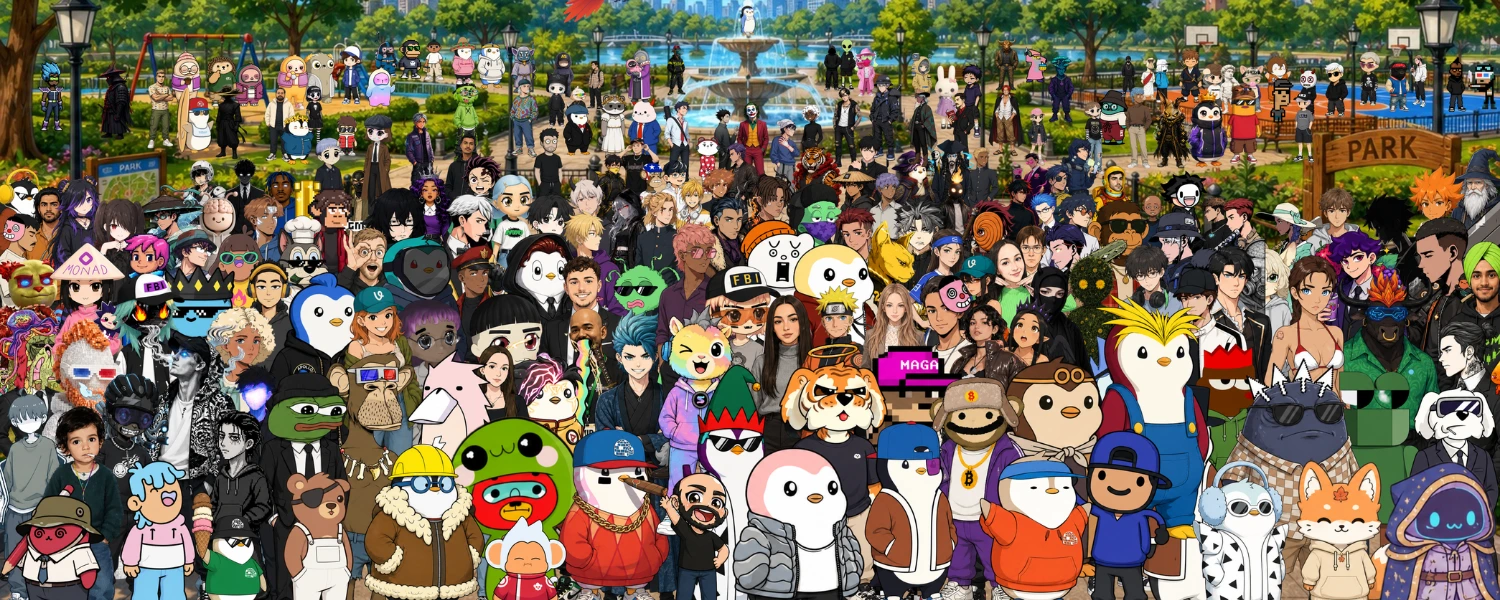
On May 5, 2026, I posted a group graphic with 254 Web3 creator characters.
The post is here: https://x.com/pawnie_/status/2051634460324516344
At the time I adapted this for Web3Lists, the post had:
The post was not just an AI image. It was a participation machine.
People searched for themselves. Then they searched for friends. Then they zoomed into the image because maybe their PFP was hidden somewhere in the background.
If they found themselves, they had a reason to react. If they did not find themselves, they still had a reason to react.
That is the difference between content people watch and content people enter.
Why group photos work
Crypto Twitter already had earlier versions of this mechanic: tier lists with dozens of PFPs, community tier lists, creator lists, and ranking graphics.
All of them work for the same reason. They make many people part of the content.
When someone sees a graphic full of recognizable people, the first question is not "is this beautiful?"
The first question is:
Am I there?
That creates a different type of attention.
If you are included
You get social currency. You can reply, quote, share, and signal that you are part of the group.
If you are not included
You can complain, joke, pretend you are hidden, say you are taking the photo, or make a counter-post for people who were left out.
Both reactions help the post spread.
My group photo went deeper than a normal PFP tier list because it had 254 characters and many tiny details.
Some characters were smaller than they should be, so people joked about it. @Deebs_DeFi was floating above everyone, so he became instantly visible. Some characters were hidden on buildings in the background.
Small details create small interactions. At scale, that matters.
The hidden engagement
The obvious engagement was good: likes, replies, retweets, quote retweets, and bookmarks.
But the quiet signal was image views.
At 33,750 views, the post had 2K image views. That means 2K people opened the image directly.
They did not just scroll past. They clicked. They zoomed. They searched.
Only 254 characters were on the image, but thousands of people still looked for themselves.
That is why this format is powerful. X does not only see a like. It sees attention. When someone searches through your image, they give your post time.
The post combines ego, belonging, curiosity, FOMO, community status, and time spent on media. That is a strong mix.
When a post becomes a format
The moment that matters is when people stop treating it as your post and start using it as their own format.
That happened quickly.
"if you're on this picture
i love you"
"if you are NOT in the photo like me
i love you"
That is when the content became bigger than the original graphic.
People used it to signal who they like. They used it to joke about exclusion. They used it to talk about their own group.
The graphic even appeared as a trend in X Explore.
That is the difference between a viral post and a trend seed.
How I made it
The first plan failed.
I wanted to test how many characters ChatGPT could fit into one image. It started with this post:
"Want to be on this graphic?
Comment below. I add everyone
(Followers first)"
The plan was simple:
- Generate the image.
- Add 4 to 5 characters.
- Generate the next version.
- Repeat.
It worked until around 15 characters. Then the earlier characters started getting worse. ChatGPT was not cleanly editing the image. It was regenerating it again and again.
At 27 characters, I stopped. ChatGPT started removing old characters and replacing them with new ones.
That was the failure point.
I could have called it a failed experiment. But too many people had already commented. I did not want to waste their engagement.
So I changed the workflow.
The production workflow
I downloaded the PFPs of people who commented under the post. Then I built a simple production system inside ChatGPT.
The character rules were:
- Keep recognizable features.
- Make everyone human-shaped.
- If a PFP is not human, turn it into a human-like character.
- If the PFP is already human, make an animated version.
- Keep one visual style.
Then I generated characters in batches of 4 to 5.
The first test looked good, so I duplicated the working chat with the branch function. I opened 4 chats and used them in parallel.
- Upload 4 PFPs.
- Ask for the next group of characters.
- Move to the next chat.
- Repeat.
By the time I finished uploading images into the fourth chat, the first chat had a result ready.
That was the whole machine.
Not magic. Parallel production plus manual assembly.
After that, I downloaded all generated character batches and assembled the final graphic in Canva. I removed backgrounds, placed characters one by one, adjusted sizes, added background characters, and made the image feel full.
The final step was manual work.
Where this trend goes next
The lazy version is obvious: make a bigger group photo.
That can work. If someone creates a bigger one than mine, people will notice. But copying the same thing is the least interesting version.
The better versions will remix the mechanism.
1. Friend group photos
Instead of 254 characters, use 5 to 10 creators in one scene: a dinner table, a trading desk, a school photo, a founder meeting, or a chaotic CT group chat turned into an image.
Smaller scenes are faster to make and feel more personal.
2. Meme scenes with creators
Take engagement formats that already work:
who would you sit next to?
which table are you joining?
choose your CT lunch group
which squad survives the bear market?
Add recognizable people and the post becomes stronger.
People do not only answer. They tag, joke, argue, and compare placements.
3. Thematic community posters
This is the strongest version for projects.
Take one ecosystem, such as MegaETH. Include founders, builders, creators, loyal community members, and recognizable accounts around that niche.
Then turn the group into one visual object.
Now you do not only activate the people inside the image. You activate everyone who identifies with that ecosystem.
That is where this format becomes community content, not just creator content.
4. More cinematic scenes
@zemoon_xbt has already been making interesting creator graphics in a more realistic direction.
This can evolve into more cinematic creator scenes, AI posters, and eventually short videos. But the tool is not the point.
The emotional object is the point.
Why most copies will fail
Many people will copy the surface.
They will make a crowd image and expect the same result.
That will not always work.
The winners will understand the psychology:
Identity
People want content that says something about who they are.
Belonging
Being included in the image makes people feel part of the group.
Status
Public inclusion becomes a small social signal.
Curiosity
People zoom, search, scan, and check again.
The image is not the trend.
Being included is.
The real tactic
This did not go viral because it was an AI image.
It went viral because people had a reason to look for themselves, react, and pull others into it.
The tactic: create content people want to find themselves inside.
That can be a group photo. It can be a meme scene. It can be a community poster. It can be a short clip. The format can change, but the mechanism stays the same.
If we see CT full of AI group photos, creator scenes, and community posters in the next few weeks, remember this:
The trend is not about making nicer images.
The trend is about making people part of the content.
Want to make your own version?
I gathered the images I used for the graphic in one place. Use them if you want to save time:
Keep an eye on @w3match.
I am building something bigger for Web3 creators and communities.
Do you already have an idea for your own spin on this trend?